
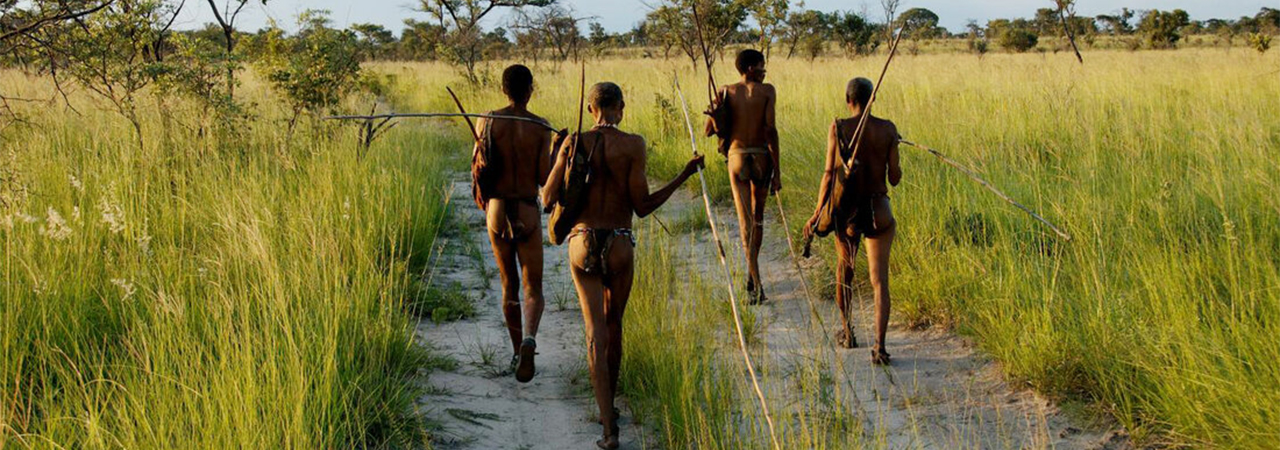
THE HISTORY OF THE CAUQUA TRIBE
The history of the Cauqua (!Khowa or !Gurikwa) tribe in the Western Cape is not as extensively documented as that of some other Khoikhoi groups, but a few key aspects of their leadership and resistance against European colonialism can be highlighted.
LEADERSHIP FIGURES
While detailed records of specific Cauqua leaders are scarce, the Khoikhoi generally operated under a chieftaincy system. Each group or clan was led by a chief, who acted as a political, military, and spiritual leader. Chiefs were responsible for organizing communal defense, overseeing cattle management, and maintaining relations with neighboring groups or colonial forces.
CONFLICT AND RESISTANCE
The Cauqua, like other Khoikhoi tribes, resisted colonial encroachment in several ways, including through skirmishes and strategic alliances:
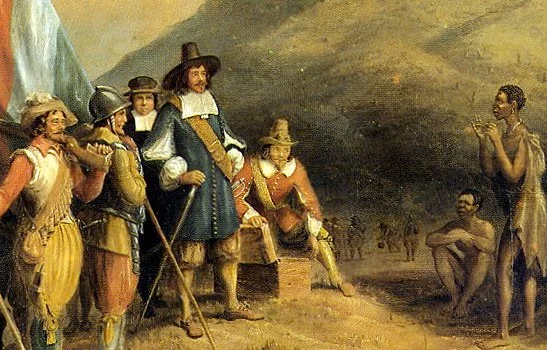
Conflict with the Dutch
The Cauqua came into contact with the Dutch settlers as the latter expanded inland from the Cape Colony during the 17th and 18th centuries. They engaged in conflicts over land and cattle, which were central to Khoikhoi livelihoods.
Smallpox Epidemic Displacement
Diseases introduced by European settlers in 1713 devastated the Khoikhoi population, including the Cauqua. This weakened their ability to resist colonial expansion and led to the loss of their land and independence.
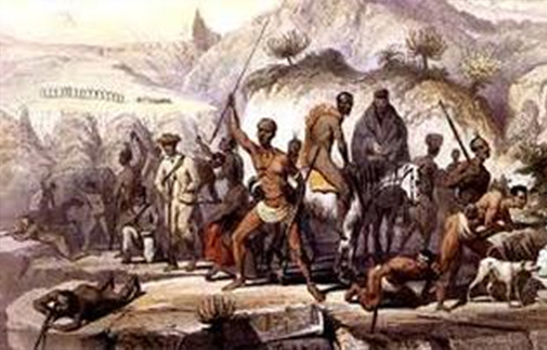
Khoikhoi-Dutch Wars
Although specific battles are not well-documented, the Cauqua were likely part of broader resistance during the Wars (1659–1660 & 1673–1677) which were sparked by Dutch land seizures and cattle raids, which threatened Khoikhoi survival.
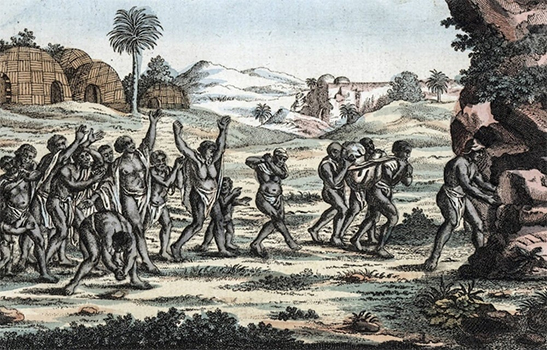
Assimilation and Forced Labour
Over time, the Cauqua, like other Khoikhoi groups, were forced into servitude on colonial farms or absorbed into labor systems under harsh conditions. Many were dispossessed of their land and reduced to marginalized status.
LEGACY
Though the names of individual leaders or specific battles may be lost, the Cauqua’s resistance was part of a broader pattern of indigenous resistance in the Western Cape. Their struggle for survival against colonial forces, diseases, and land dispossession represents the resilience of Khoikhoi culture despite overwhelming challenges.
However, historical sources about the Khoikhoi people (who were indigenous pastoralists in South Africa) suggest that they were organized into various clans or subgroups, such as the Gorachoqua and Cochoqua. These groups lived in the Cape region and interacted with European settlers from the late 15th century onward. They were part of the broader Khoekhoe-speaking population, often referred to as the Cape Khoi.
The Khoikhoi were originally herders who migrated from northern Botswana to the Cape around 2,000 years ago. Their lifestyle, based on cattle and sheep grazing, led them to conflict with local San hunter-gatherers over land and resources. These groups were not homogeneous but rather consisted of distinct clans and alliances. Over time, colonial expansion, disease, and land dispossession severely disrupted their social and cultural structures. Surnames connected to these groups are rare in early records since traditional Khoikhoi culture did not emphasize family names in the European sense. However, later colonial influences and integration may have led to the adoption of specific surnames.